

If you’ve recently been diagnosed with a meniscus tear in the knee, it’s normal to feel unsure about what comes next.
- Do you need surgery?
- Can physio really fix it?
- What option gives you the best long-term outcome?
The good news is that current evidence gives us clearer answers than ever before — and for many people, surgery is not needed. If you’re looking for information on what the best treatment is for meniscus tears, or looking for a physio for a meniscus tear in Sydney, this guide will help you understand your options and make an informed decision.
The Meniscus: A Vital Structure in Knee Health
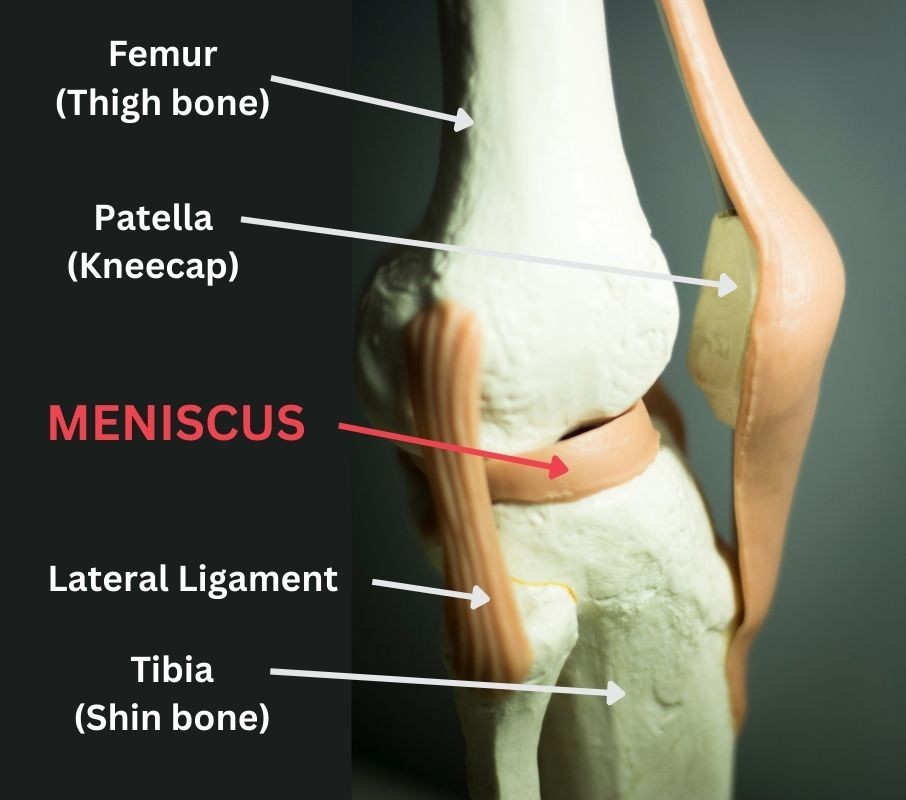
The menisci are two C-shaped cartilage structures that sit between the thigh bone (femur) and shin bone (tibia). Their role is critical for healthy knee function, including for general walking and daily activity as well as during exercise and sport. The meniscus:
- Acts like a shock-absorber, converting vertical forces (walking, running, jumping) into circumferential tension
- Distributes load more evenly across the knee joint
- Reduces stress on the articular cartilage and surrounding bone
- Improves knee stability and proprioception
When there is meniscus damage in the knee, the joint’s ability to absorb and manage load is reduced — which is why symptoms often appear during everyday movements, not just sport.
Types of Meniscus Tear: Degenerative vs Acute
Meniscal tears generally fall into two categories.
1. Degenerative Meniscus Tear
- Develop gradually with age and joint wear
- Very common in people over 40
- Often occur without a clear injury event
These are frequently part of a broader joint load and capacity issue rather than a single traumatic injury.
2. Acute Meniscus Tear
- More common in younger or athletic individuals
- Typically occur during twisting or pivoting movements
- Often associated with sport or high-velocity changes in direction
Understanding which type of meniscus tear you have is crucial when deciding on treatment.
Healing Potential: Why Meniscus Tear Location Matters
The meniscus has different blood supply zones, which affects healing capacity.
- Red–Red Zone (outer third):
Good blood supply → best healing potential - Red–White Zone (middle third):
Moderate blood supply → variable healing - White–White Zone (inner third):
No direct blood supply → relies on joint fluid for nutrition
Tear location plays a major role in determining whether conservative physiotherapy management or surgery is most appropriate.
Tears where the blood supply is good, i.e. the red-red zone, are much more likely to heal well with physiotherapy (conservative) management. Tears in the red-white zone will still often heal well depending on other factors, eg the type or direction of the tear. Tears in the white-white zone have less healing potential and so may be more likely to require surgical treatment.
Conservative (Physiotherapy) Management for Meniscus Tears
For degenerative meniscus tears, conservative treatment is the first-line recommendation and is shown to be as effective as surgery in many cases.
For acute meniscus tears, the decision depends on:
- Tear type
- Tear location
- Presence of true mechanical symptoms, eg if your knee is locked in a bent position (flexion)
If you do not have significant locking, blocked movement, or severe mechanical catching, physio should be your preferred starting point. An MRI may be recommended to clarify the type and location of the tear, but this depends on your symptoms and often is not required.
What Does High-Quality Meniscus Physio Involve?
A structured rehab program typically focuses on:
- Early load management and pain control
- Restoring full knee range of motion (especially extension/knee straightening)
- Progressive lower-limb strengthening
- Balance and proprioception (movement control) training
- Gradual return to sport, running and exercise
This approach doesn’t just reduce symptoms — it improves the knee’s ability to tolerate load long-term. This is vital for lasting pain resolution, minimising the risk of future injury, and maximising overall knee health.
Surgical Options: Understanding the Trade-Offs
Surgery can be appropriate in specific cases, particularly when:
- Mechanical symptoms are severe, eg the knee is locked and can’t straighten
- Conservative management has failed
- The tear significantly disrupts knee biomechanics and prevents you returning to the sport or activity that you want to
- The pain keeps recurring, eg the pain comes back whenever you try to return to full sporting activity
If surgery is needed, then the type of surgery matters.
Partial Meniscectomy
In a partial menisectomy the damaged portion of the meniscus is removed.
- Often provides good short-term symptom relief
- Removes meniscal tissue permanently
- Associated with an increased long-term risk of knee osteoarthritis
Meniscal Repair
In meniscal repair surgery the meniscus tear is stitched together to try and preserve all of the cartilage.
- Only possible for certain tear patterns and zones
- Better long-term joint preservation (because no cartilage is removed)
- Reduced risk of osteoarthritis compared to meniscectomy
- Requires strict post-operative rehab
- Some risk of repair failure
Post-Operative Rehab Is Non-Negotiable For Meniscus Injuries
Even when surgery is the right decision, rehabilitation is essential. Post-operative physio focuses on:
- Restoring strength
- Rebuilding balance and proprioception
- Gradual return to impact and sport
- Protecting long-term knee health
Rehab plays a critical role in:
- Reducing osteoarthritis risk
- Minimising the risk of re-tearing or repair failure
Surgery does not replace rehab — it simply changes the starting point!
Choosing the Right Path: Start With an Expert Physio Assessment
The most important step is an accurate diagnosis and individualised plan. At Central Performance in Surry Hills, our knee physios:
- Assess whether your symptoms are coming from the meniscus
- Identify tear severity, load tolerance, and movement limitations
- Guide you through conservative rehab or post-surgical recovery, focusing on rebuilding strength, stability and flexibility
- Guide you every step of the way as you return to your normal activity, exercise or sport
- Integrate strength and conditioning for you to continue on with to protect your knee long-term
Our approach bridges the gap between rehab and performance. Our unique Relieve → Restore → Elevate pathway seamlessly helps you move from pain and early rehab, through to confidently returning to full activity, sport and exeercise.
Meniscus Tear – Physio Treatment in Sydney
If you’re dealing with a meniscus tear knee injury or ongoing knee pain and want clarity on whether physio or surgery is right for you, we can help. Our physios are highly experienced in the assessment, diagnosis and treatment of knee injuries including all levels of meniscus tears. Plus our fully-equipped onsite gym allows us to seamlessly progress your rehab from early mobility and strength, through to advanced return-to-sport drills and stability, all at one great location under the care of an experienced and friendly team.
Need help returning to sport after a meniscus injury? Our Knee Rehabilitation Pathway is designed specifically to help you get back onto the field confidently, stronger, faster, and with the least possible chance of re-injury.
Get Expert Physio Support for Knee Meniscus Tears in Sydney
At Central Performance, our team of experienced running physios have years of expertise managing knee injuries, including meniscus damage and tears Our Surry Hills clinic combines physiotherapy with exercise physiology and Pilates, complete with a fully-equipped onsite gym for advanced rehab and return-to-sport training.
🕒 Early mornings, evenings & Saturday physio appointments available
For more information call us on 9280 2322 or click below to book your knee physio appointment or ask a question
