

When can I return to running after ACL injury or surgery: If you’ve had an ACL injury, whether you’ve decided to rehab it without surgery or have been recommended to have a reconstruction, one of the first big questions is:
“When can I run again?”
It’s a fair question — but it’s also where a lot of people go wrong. Because returning to running after ACL injury isn’t about hitting a certain week in your rehab timeline. It’s about whether your knee is actually ready to handle the demands of running.
At Central Performance, we guide clients through a proven, structured, criteria-based approach to return to running after ACL rehab — so you can rebuild properly and avoid setbacks. We do this through our ACL Rehab Sydney and Knee Physio Program, where we take the guesswork out of deciding when you’re ready to start running again, by using cutting-edge tech like VALD ForceDecks for objective measures of strength, power and control.
Why Returning to Running After ACL is Not Just About Time
Most ACL rehab timelines suggest running somewhere between 3–4 months. But this is an outdated approach because timelines don’t account for:
- Individual recovery variability: this is huge, because everyone’s rehab journey is different
- Strength deficits: strength is a major predictor of a safe return to running, so you need to be fully tested
- Movement quality: you need to have correct biomechanics and control of movement, not just get it done somehow
- Swelling or inflammation: these are signs you knee may not be ready for more impact
- Load tolerance: adjusting your return to run timeframe and volume should be based on clinical testing
A knee can feel “good” walking around day-to-day and still be underprepared for running.
Running places repetitive, high-impact loads through the knee — and if your body isn’t ready, you’re more likely to:
- Flare up swelling or pain
- Compensate with poor movement patterns (which can cause pain in other places as well as flare up your knee)
- Delay your overall recovery
- Increase re-injury risk
That’s why a proper ACL rehab program should always be based on meeting specific criteria for strength, power and control — not just progressing according to timelines on a calendar.
How Do You Know When Your Knee Is Ready To Start Running After ACL Injury or Surgery?
Before you begin running, your knee needs to demonstrate that it can tolerate load safely and efficiently. This is where objective criteria really matter, and working through a proven system of testing and progression gives you maximum safety and confidence while minimising the risk of flare-up.
At Central Performance our ACL Rehab Sydney and Knee Physio program uses clear, measurable benchmarks to guide your return to running:
- 20 single leg calf raises at 60 beats per minute (bpm)
- Quiet knee (no increase in swelling or pain with progressive plyometrics)
- Full knee extension and strong straight leg raise
- Quality movement patterns in run-specific drills
- <30% limb asymmetry on quad and hamstring strength testing (VALD dynamometry)
- <15% impulse asymmetry on 10:5 hop test with RSI ≥ 1.5
- Confidence to return to running
These criteria ensure your knee is prepared for the real demands of running, not just day-to-day activity. This is how we help you return to running with confidence while reducing re-injury risk.
How We Progress Running After ACL Rehab
Once you meet the criteria, you don’t just jump straight back in to full running training. It’s introduced progressively, while monitoring your knee to see how it responds to the extra load, and adjusting your program accordingly.
Most people start with a walk–run program, gradually increasing:
- Running intervals
- Total running volume
- Intensity and speed
We closely monitor how your knee responds:
- Any increase in swelling
- Pain during or after running
- Movement quality and fatigue
If your knee tolerates the load well, we progress. If not, we adjust. This is where working with an experienced ACL rehab physio, using a proven system for testing and progression, makes a big difference — you’re not guessing, you’re progressing with purpose.
Four Common Mistakes When Returning to Running After ACL
We really understand how frustrating and time-consuming going through rehab for an ACL injury can be. So we also get how tempting it is to take short-cuts and push things too much too early. It’s pretty natural to get impatient, and this often leads to the same issues come up time and time again.
1. Starting running too early
Just because you’ve hit a certain week doesn’t mean your knee is ready. Research shows it is far safer and more effective to use criteria (e.g. strength and power) to guide progression and return to running, not timelines.
2. Ignoring strength deficits
If your quads and hamstrings are still behind, your knee usually won’t handle running well.
3. Progressing too quickly
Increasing volume or intensity too fast is one of the biggest causes of setbacks.
4. Using time instead of criteria
This is the biggest one — and the most avoidable. If you want a smooth return, you need to earn each stage of progression.
How a Structured ACL Rehab Program Improves Your Return to Running
Returning to running is just one stage of a bigger process. A high-quality ACL rehab program should guide you through:
- Early rehab (pain, swelling, movement)
- Strength development
- Power and plyometrics
- Running progression
- Return to sport
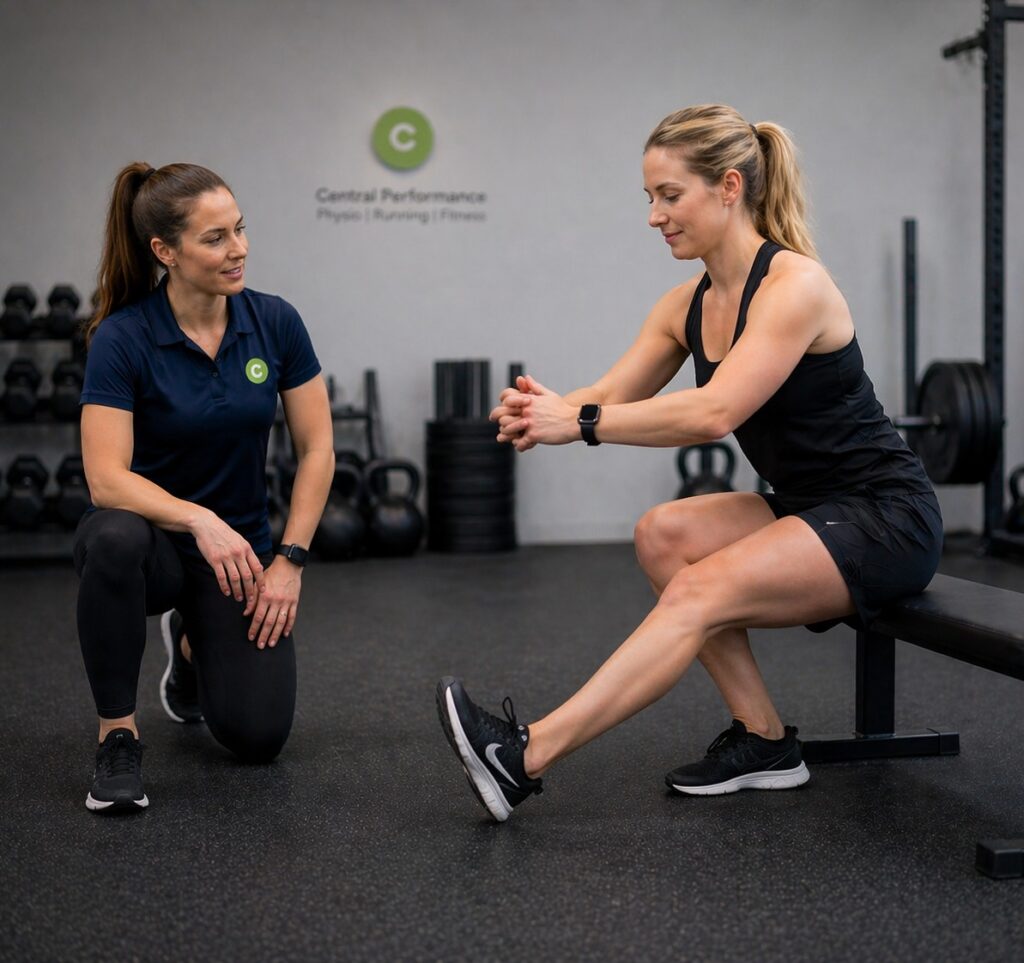
At Central Performance, our ACL knee rehab program integrates:
- Physiotherapy – with physios who really understand and are experienced with ACL rehab, including with elite athletes as well as recreational clients
- Objective testing – including VALD ForceDeck and DynaMo strength testing systems
- Strength and conditioning – informed and fine-tuned by your testing results
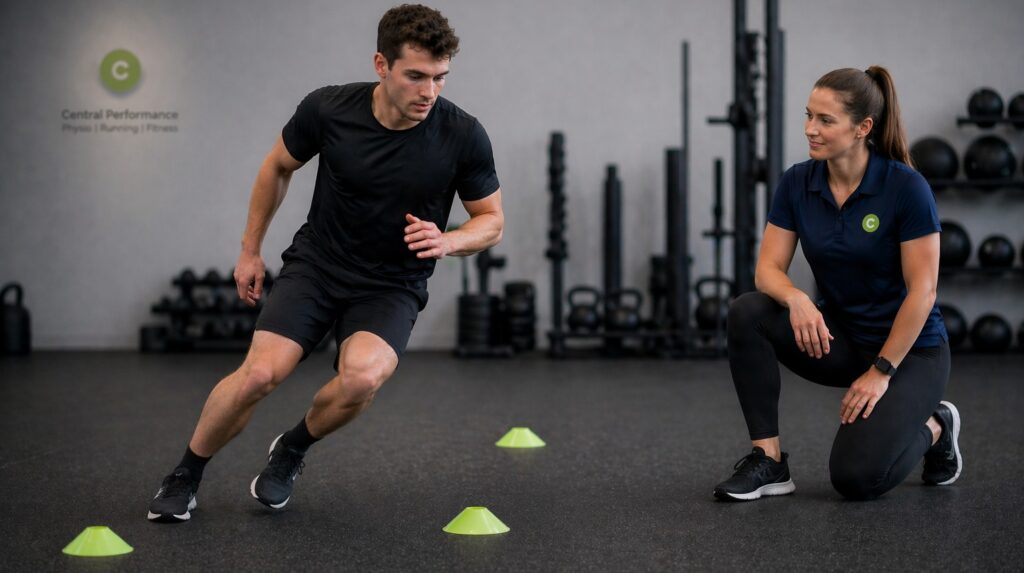
- Running-specific rehab – including field sessions using progressive drills for running mechanics, agility and speed
With our full onsite gym, VALD testing systems and on-field training sessions all available at Central Performance in Surry Hills, we make it easy to move seamlessly from rehab to performance, and then get back in the game confidently and safely.
When Can You Run After ACL Surgery?
Most people begin running somewhere between 3–4 months after ACL reconstruction. But this is only a rough guide.
The Real Answer Is: You can run when your knee meets the right criteria.
For some people, that might be earlier. For others, it may take longer.
Rushing this stage never helps — and often delays your overall recovery.
Why Work With a Physio for Return to Running After ACL Injury
A structured, physio-guided return to running helps you:
- Regain confidence in your knee, which is a key part of ACL rehab and returning to running and sport
- Reduce re-injury risk
- Progress at the right pace with confidence and safety
- Identify and fix movement issues before they become a problem
- Build the strength and movement control required for running with correct biomechanics and progressing to change-of-direction, pivoting and multi-directional movements
Returning to running and sport after an ACL injury or surgery is a big step, so if you’re searching for a “sports physio Sydney” or “physio near me“, it’s important to find someone who isn’t just local to you, but who really understands both rehab and performance — not just injury treatment. Objective testing to take the guesswork out of your program, using a structured set of criteria to guide progression, and having a proven system including field-based sessions to get you out and putting drills into practice, are all vital ingredients of a high quality ACL rehab program.
At Central Performance our tested and proven ACL Knee Rehab Program delivers everything you need for your complete ACL rehab program, all at one convenient Surry Hills location.
This makes it easy for clients in Redfern, Darlinghurst, Sydney CDB, Paddington, Ultimo and the inner west to access all of their ACL rehab in one great facility, lead by an experienced team with all of the latest technology.
Looking for How To Return to Running Properly After ACL Injury or Surgery?
If you’re looking for guidance on return to running after ACL injury or surgery, the key is working with an experienced knee/ACL physio and having a clear plan for how you will progress. This plan should be guided by regular testing to ensure you meet the criteria for each stage before progressing to the next – this takes the guesswork out of your program and maximises your confidence and safety.
At Central Performance, we provide structured, criteria-based ACL rehab in Sydney, helping you progress safely from rehab to running and beyond. Serving Surry Hills, Redfern, Darlinghurst, Sydney CBD and the inner west, our team combines physio, strength training, and objective testing to guide every stage of your recovery.
Your first step to returning to running after an ACL injury is simple — book an assessment with our knee physio, Joden Wilson. As well as being a Central Performance physio Joden also heads up the South Sydney Rabbitohs pathways long-term rehab program, managing athletes through post-surgical ACL/knee rehabilitation, return to running, and field-based performance progressions. This experience allows him to bring elite-level rehab principles and return-to-sport expertise into our ACL/knee rehab program.

In this first session, Joden will:
- Assess your knee and confirm your diagnosis
- Understand your goals (sport, running, gym, or general activity)
- Map out your full knee/ACL rehab journey
- Show you exactly where you’re at right now
- Get your program started on day 1
From there, Joden will guide you on when you’re ready to progress from 1:1 treatment into our structured ACL rehab and knee physio program, which includes return to running, strength training and return-to-sport phases. This gives you a clear plan, clear direction, and confidence from day one.
Click below for more information or to book your first session
Written by Joden Wilson — ACL Rehab Physiotherapist · Updated August 2026
Returning To Running After ACL Injury or Surgery – FAQs
When can I run after ACL surgery or injury?
Most people start between 3–4 months, but only when they meet specific strength and movement criteria. A proper program for return to running after ACL injury should be guided by meeting set criteria, not just by how many weeks you after following injury or surgery.
What happens if I run too early after ACL?
You increase the risk of swelling, pain, poor movement patterns, and delayed recovery. Your risk of re-injury is also increased.
Do I need strength before running?
Yes — strength, especially in the quadriceps and hamstrings, is critical for safe running.
Can I return to running without physio?
You can, but you’re much more likely to progress incorrectly or miss key deficits. This is more likely to result in increased pain and swelling, and potentially increased risk of re-injury.
What is a return to run program after ACL?
A structured plan that gradually reintroduces running based on your knee’s capacity and response to load. It includes specific testing for strength, mobility, movement control and correct running mechanics.
