


Reviewed by Chris Jackson, APA Titled Musculoskeletal Physiotherapist & Running Physio · Last updated June 2026
Hip pain when running is one of the more frustrating niggles a runner can pick up — and the reassuring news is that, in most cases, it’s an overload problem rather than a sign of lasting joint damage. It usually means the hip is being asked to do a little more than it’s currently built for, whether that’s a jump in weekly distance, more hills, faster sessions, or a dip in strength. The most common cause is gluteal tendinopathy, felt on the outside of the hip, but pain can also show up at the front (groin or hip flexor) or deep in the buttock. At Central Performance in Surry Hills, hip pain is one of the issues we see most often in Sydney runners training around Centennial Park, Moore Park and the harbour. This guide explains where the pain comes from, some simple self-checks you can do today, and how to settle it so you can get back to running comfortably.
Quick answer: the key takeaways on hip pain when running
- Most hip pain when running is a load or overuse issue, not permanent joint damage.
- Where it hurts is the biggest clue — the outer hip, the front/groin, and the deep buttock each point to different causes.
- You usually don’t have to stop running completely; reducing and modifying your training is often enough.
- Strengthening the glutes and hip, plus small running-technique tweaks like cadence, is the core of lasting recovery.
- Deep groin pain that hurts when you put weight on the leg or hop needs prompt assessment — don’t push through that one.
Where does it hurt? Using location to find the cause
The single most useful thing you can do is work out exactly where your hip pain sits. Runners tend to fall into one of three patterns, and each points towards a different structure.
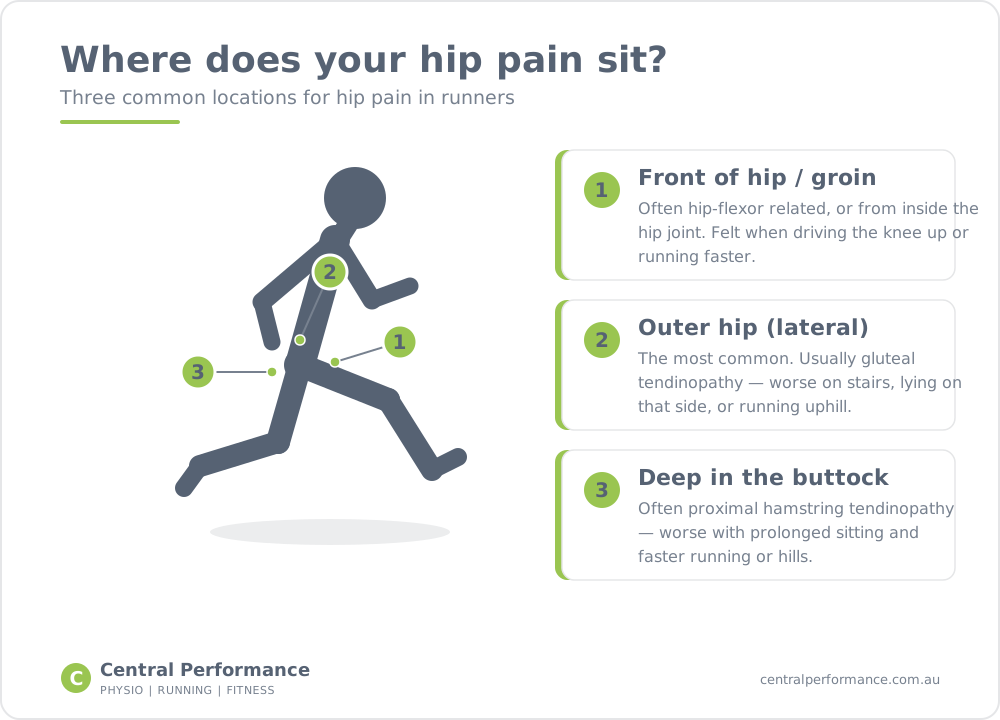
Outer hip (lateral) — the most common
Pain on the bony point on the outside of your hip, sometimes spreading down the outer thigh. It’s often worse lying on that side at night, going up stairs, standing on one leg, or running uphill. This pattern usually points to gluteal tendinopathy (also called greater trochanteric pain syndrome). Pain that travels further down the outer thigh towards the knee can also involve the iliotibial (IT) band.
Front of hip or groin (anterior)
A pinch, ache or pulling sensation at the front of the hip or in the groin crease. It can flare with driving the knee up, running faster, or lifting the leg. This is often hip-flexor–related, but front-of-hip and groin pain can also come from inside the hip joint itself (see below).
Deep in the buttock (posterior)
An ache at the base of the buttock, near the “sit bone”, that’s worse sitting for long periods and during faster running or hills. This pattern is typical of proximal hamstring tendinopathy.
Common causes of hip pain in runners
Gluteal tendinopathy (lateral hip)
The gluteal tendons attach on the outer hip and help keep your pelvis level as you run. When the load on them is greater than what they can handle, they become irritated. A big contributor is the pelvis dropping and the thigh falling inwards on each footstrike, which compresses the tendon against the bone — so positions that add compression (running with a “crossover” gait, crossing your legs, standing with your weight slumped onto one hip, lying on the sore side) tend to aggravate it.
Hip-flexor–related pain (front of hip)
The hip flexors work hard to drive your leg through each stride. Rapidly increasing speed work, hills or volume — or long days sitting at a desk before training — can leave them overloaded and sensitive at the front of the hip.
Proximal hamstring tendinopathy (buttock)
The hamstring tendon attaches at the sit bone, and like the glutes it can become overloaded with too much too soon, especially with hills and faster running. The tell-tale sign is deep buttock pain that’s worse with prolonged sitting.
Hip joint issues (groin)
Deep groin pain, stiffness, or a pinching sensation at the end of your range can come from inside the hip joint — for example impingement, a labral irritation, or early osteoarthritis. These are very manageable, but they benefit from a proper assessment rather than guesswork. If you’re a little older or also notice stiffness in everyday life, it’s worth reading our guide on physio for hip and knee osteoarthritis.
Femoral Bone Stress Injury or Stress Fracture – A Red Flag!
One pattern that needs prompt attention: deep groin pain that hurts when you put weight through the leg, hop, or land — particularly with night pain or after an increase in training — can signal a bone stress injury at the top of the thigh bone – called a femoral bone stress injury or stress fracture. This is uncommon but serious, and you can’t run through it or keep running with this. Stop running and get it assessed early.
Across all of these, the common thread is load — doing more than your hips are currently prepared for. Contributing factors we commonly find include weak hip and glute muscles, a low running cadence, reduced hip mobility, and a recent spike in distance or intensity.
Simple self-checks you can do today
- Map the pain. Point to it with one finger — outer hip, front/groin, or deep buttock (use the three zones above).
- Note what aggravates it. Stairs, hills, sitting, lying on your side, or single-leg standing each give different clues.
- Check the warm-up pattern. Tendon-related pain often eases a few minutes into a run, then returns later or the next morning.
- Try the single-leg test. Stand on the sore leg for 30 seconds, then rise onto your toes a few times. Reproducing your pain points towards a hip or tendon load issue.
- Screen for the red flag. If hopping or weight-bearing through the groin is sharply painful, skip the self-management and book an assessment. This may indicate a femoral bone stress injury.
What to do first (the first week or two)
Most hip pain settles fastest when you reduce the load without going to complete rest. Practical first steps:
- Modify, don’t stop. Trim your volume and intensity — fewer hills and speed sessions for now — rather than stopping running altogether, unless pain is high or you have the red-flag pattern above.
- Cross-train to keep fitness. Cycling or pool running let you maintain conditioning while the hip calms down.
- Reduce compression (for outer-hip pain). Avoid crossing your legs, hanging your weight onto one hip when you stand, and sleeping on the sore side — pop a pillow between your knees instead.
- Go easy on aggressive stretching. Strong stretching of an irritated gluteal or hamstring tendon often adds compression and makes it worse. Gentle movement beats hard stretching here.
Treatment and rehab: fixing the cause
Settling the symptoms is the easy part — the lasting fix is rebuilding the hip’s capacity so it can handle your running again. A good rehab plan usually combines:
- Progressive strengthening of the glutes, hip and core, loaded gradually so the tendons and muscles adapt. This is the part that prevents the problem coming back, and it’s where a structured strength and conditioning program for runners earns its keep.
- Running-technique tweaks. Many runners with lateral hip pain do well by lifting their cadence slightly (often around 5–10%), which reduces how far the pelvis drops on each step and takes load off the hip. Also a cross-over running gait, where your feet cross over each other as they land on the ground, can be associated with some hip pain like gluteal tendinopathy. Working with a running coach to correct this can be part of effective long-term management.
- A graded return to load — building back hills, speed and distance in a planned way rather than all at once.
- Hands-on treatment as a helper, not a cure — useful early on to ease symptoms while the strength work does the heavy lifting.
Because the right plan depends on which structure is involved, a quick assessment to confirm the cause usually saves weeks of trial and error.
Returning to running after hip pain
Once your pain has settled and your strength is improving, read our blog on how to build your running back gradually. A few principles we use with runners:
- Volume before intensity. Rebuild your easy kilometres first, then reintroduce hills and speed.
- Use the 24-hour rule. A little discomfort during a run (around 2–3 out of 10) that settles quickly is usually fine; pain that lingers or is worse the next morning means you’ve done a touch too much.
- Keep cross-training in the mix as you ramp up, so you’re not loading the hip every single day.
If the same niggle keeps returning, a running gait assessment can pinpoint the technique factors feeding it, so you’re not stuck in the rehab-reinjure loop.
When to see a running physio in Sydney
For a full guide to help you decide if it’s time to see a running physio, see our blog on the subject.
As a starting point, it’s worth getting your hip looked at if:
- It hasn’t clearly improved after a week or two of sensible load management.
- The same pain keeps coming back each time you build your training.
- It’s affecting your everyday life — walking, stairs, sitting or sleep.
- You have the deep-groin, painful-weight-bearing pattern (get this seen promptly).
Our goal is always to keep you running wherever it’s safe to do so, with a clear plan to fix the underlying cause. If you’re a runner in Surry Hills, Redfern, Darlinghurst, Paddington or the surrounding inner-Sydney suburbs, our running physio team can assess your hip, confirm what’s driving it, and map out your return to running.

Related reading for hip pain when running
Hip Pain When Running – Frequently asked questions
Why do my hips hurt after running?
Hip pain after running is usually an overload issue — your hip has been asked to do more than it’s currently prepared for, often after a jump in distance, hills or speed, or when hip and glute strength is lacking. The most common specific cause is gluteal tendinopathy on the outside of the hip.
Should I keep running with hip pain?
In many cases you can keep running at a reduced level while the hip settles, especially for mild outer-hip or front-of-hip pain. The exception is deep groin pain that hurts when you put weight through the leg or hop — that one needs assessment before you continue.
How do I fix hip pain from running?
Reduce your running load (without necessarily stopping), avoid positions that aggravate it, and start progressive strengthening for the glutes, hip and core. Small technique changes such as lifting your cadence can also help. If it’s not improving, a physio assessment will confirm the cause and tailor the plan.
How long does hip pain from running take to heal?
Mild cases often settle within a few weeks with sensible load management and strengthening. Tendon-related hip pain that has been building for a while can take a couple of months of consistent rehab — but most runners recover fully and return stronger.
Is hip pain when running serious?
Usually not — most hip pain in runners is a manageable overload problem, not permanent damage. The main exception is a bone stress injury, which tends to cause deep groin pain that’s painful on weight-bearing or hopping and warrants prompt assessment.
What exercises help hip pain from running?
Progressive glute and hip-abductor strengthening is the backbone of recovery, alongside core work. The specific exercises and how quickly you load them depend on which structure is involved, so it’s best guided by an assessment rather than a generic list.
Physio for Hip Pain When Running – Central Performance
If you have hip pain when you run, and need some advice or treatment, we’re here to help. You can click on the buttons on the right to ask us a question, or book physio online. You can also click to find out more about the services available at Central Performances’ Sydney Running Centre, where we work with runners of all abilities to provide running physio, coaching and strength and conditioning programs.
This article is general information for Sydney runners and isn’t a substitute for individual assessment. Written by the APA-titled musculoskeletal physiotherapy team at Central Performance, Surry Hills.
