

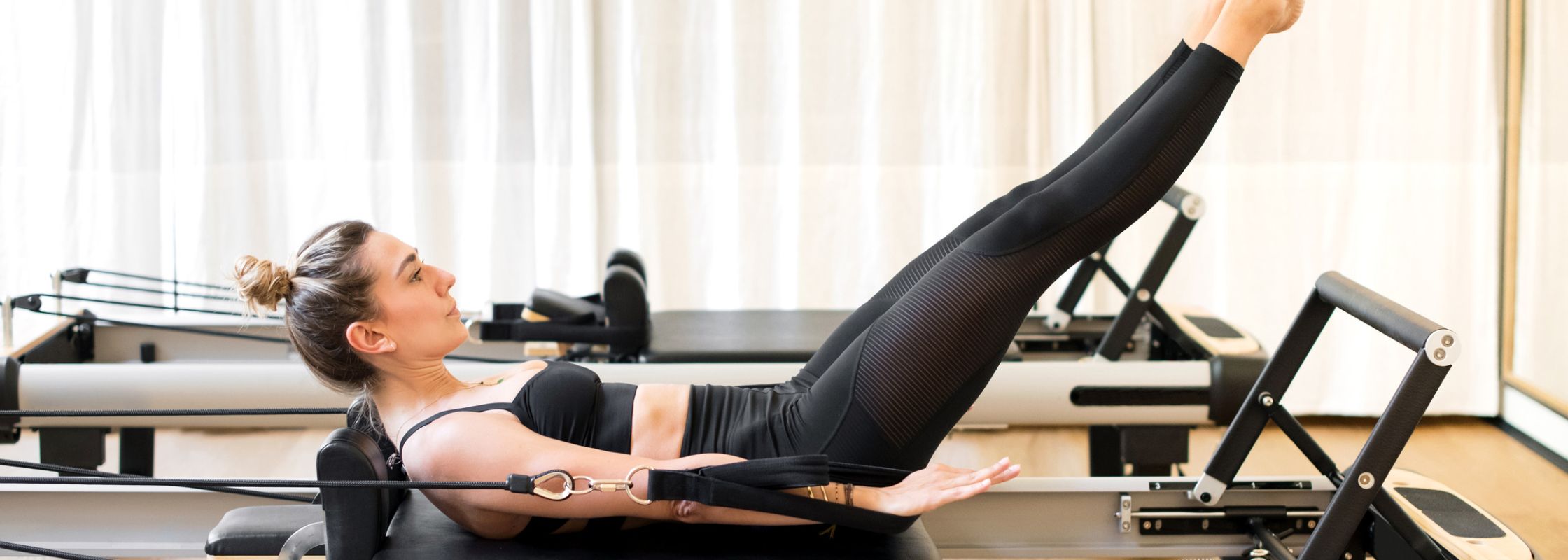
If you’re wondering how Clinical Pilates health fund claims work, the short answer is that most people with physiotherapy extras can claim it, as long as the session is delivered by a physiotherapist as part of your treatment. In that setting, Clinical Pilates is billed as physiotherapy, so it comes off your physio extras rather than a Pilates or natural therapies benefit.
Where it gets confusing is everything else that calls itself Pilates. Private sessions with a Pilates instructor, reformer classes and studio packs are treated differently, and the rules changed again on 1 July 2025. Then there’s Medicare, which runs on a separate system altogether.
This guide explains what’s usually claimable, what usually isn’t, and the questions to ask your fund before you book, so there are no surprises when your card goes through the HICAPS terminal.
Key takeaways
- Clinical Pilates delivered by a physiotherapist is claimed as physiotherapy under your extras cover, subject to your fund’s limits and waiting periods.
- Since 1 July 2025, private Pilates with a Pilates instructor may be claimable, depending on your fund and level of cover. Check with your fund.
- General group, reformer and studio classes are usually not claimable.
- Medicare doesn’t cover Pilates classes. Eligible people with a chronic condition may get a limited number of subsidised allied health visits through a GP plan.
- You don’t need a GP referral to see a physio or start Clinical Pilates privately, and you can claim on the spot with HICAPS.
Written by Mikayla Mestousis — APA Physiotherapist, Certified Running Coach, Pilates Instructor & S&C Coach · Reviewed by Chris Jackson, APA Titled Musculoskeletal Physiotherapist · Updated November 2026
Clinical Pilates health fund claims: the short answer
Whether you can claim comes down to one question: who is delivering the session, and why? Health funds don’t pay for “Pilates” as a single thing. They pay for specific services from specific providers, under specific parts of your policy.
Here’s how the three main options usually play out:
- Clinical Pilates with a physiotherapist: claimed as physiotherapy under your extras. Usually claimable if your policy includes physio.
- Private Pilates with a Pilates instructor: may be claimable since 1 July 2025, depending on your fund and level of cover. Check with your fund.
- Group reformer, mat or studio classes: usually not claimable.
How much you get back is set by your fund, not by the clinic. It depends on your level of extras, your annual limit for physiotherapy, any waiting periods and how much of that limit you’ve already used this year.
Why Clinical Pilates with a physio is claimed differently from a studio class
Health funds pay physiotherapy benefits for physiotherapy services. Pilates is an exercise method. When a physio uses Pilates-based exercise as part of your treatment, with assessment, clinical reasoning and goals behind it, the session is a physiotherapy service that happens to use Pilates equipment and principles.
That distinction has been in place for years. When Pilates was removed from private health insurance benefits in April 2019, funds could still pay benefits where a physiotherapist used Pilates-based exercise within a patient’s treatment. Studio classes run for general fitness lost their rebates at that point.
What makes a session Clinical Pilates
- A physio assessment first: your history, symptoms and how you move, so the program matches what’s actually going on.
- A program built around your problem: for example, low back pain that builds through a long desk day and flares on the third set of deadlifts, or a hamstring that keeps grabbing at the 8 km mark.
- Clear goals and outcome measures: what you need to be able to do, and how progress will be tracked.
- Progression and reassessment: exercises are loaded and changed as you improve, and your physio checks you’re on track.
- Clinical notes: each session is documented like any other physio consultation.
Clinical Pilates at Central Performance
Our Clinical Pilates program in Sydney is delivered by our physiotherapists Harry Fry and Mikayla Mestousis, and it’s claimable as physiotherapy. It usually sits in the Restore stage of our Relieve → Restore → Elevate pathway: once pain has settled, you rebuild control, strength and confidence before moving on to strength & conditioning, running or contemporary Pilates.
Private Pilates with a Pilates instructor: what changed in July 2025
From 1 April 2019, Pilates was one of a group of natural therapies excluded from private health insurance benefits after a government review. A later review recommended bringing some of them back, and from 1 July 2025 Pilates was one of seven therapies re-included. In plain terms, health funds are now allowed to pay benefits for Pilates again.
Allowed isn’t the same as automatic, though. Each fund decides whether to cover Pilates, which policies include it, how much it pays, and what qualifications or registration the instructor needs to hold.
So for private sessions with a Pilates instructor, including our private Pilates sessions with Narelle Clark, whether you can claim depends on your fund and level of cover. Check with your fund before you book, and ask what details they need from the instructor to process a claim.
Group and reformer classes: usually not claimable
General group classes, reformer class packs and studio memberships are usually not claimable. They’re treated as exercise or fitness, not as a health service delivered to an individual patient, so they generally fall outside both physiotherapy and Pilates benefits.
Some extras policies include a separate wellness or healthy lifestyle benefit, but what it covers varies widely. If you’re hoping to put one of these towards classes, check with your fund first.
At Central Performance, our ReForm contemporary Pilates classes are a separate offering from Clinical Pilates. They run in small groups of up to four, focus on strength, control and conditioning, and aren’t billed as physiotherapy. Many people move into ReForm once their Clinical Pilates goals are met.
Does Medicare cover Clinical Pilates?
Medicare doesn’t cover Pilates classes. However, some 1:1 sessions with a physiotherapist that includes Pilates exercises may be covered. If that applies to you, your GP may set up a chronic condition management plan. Eligible people may then receive a limited number of Medicare-subsidised allied health visits each calendar year, which can include individual physiotherapy consultations. A few points to keep in mind:
- Your GP decides eligibility: the plan has to be in place, with a referral, before your physio visit.
- Visits are limited: the subsidised visits are shared across allied health services, so plan how you’ll use them.
- Group classes generally aren’t covered under these plans.
- There’s usually a gap: the Medicare rebate covers part of the fee, not all of it.
Workers compensation, DVA and CTP claims follow their own rules and do need a referral. If one of these applies, call our reception team before you book so we can set it up correctly.
5 questions to ask your health fund before you book
A five-minute call or a look at your fund’s app can save you guessing. Ask:
- Do I have physiotherapy on my extras, and what’s my annual limit? This is the main figure for Clinical Pilates with a physio.
- How much of that limit have I used, and when does it reset? Some funds reset on the calendar year, others on your membership year.
- Are there any waiting periods on physio? These often apply if you’ve recently joined or upgraded your cover.
- Is there a per-visit cap, or a different benefit for group sessions? Individual and group physio can be paid at different rates.
- Does my policy cover Pilates with a Pilates instructor? If so, ask what qualifications or registration the instructor needs.
To get an accurate estimate, ask our reception team for the item number your session will be billed under and give it to your fund. Jot down the date and reference number of your call, too.
How claiming works at Central Performance (HICAPS on the spot)
We accept all health funds and process claims on the spot through HICAPS, so you don’t need to lodge anything yourself.
- Bring your health fund card to each session.
- We claim at the end of your session: your fund pays its share straight away and you pay only the gap.
- No referral needed: you can book physiotherapy or Clinical Pilates directly.
- Know the fees upfront: please call reception for our updated price list.
If you’re new to us, you’ll usually start with a physiotherapy assessment in Surry Hills, so your physio can work out whether Clinical Pilates suits you and what your program should focus on.
Is Clinical Pilates right for you? Signs to see a physio first
Clinical Pilates is a good fit when you’re recovering from an injury or surgery, managing a recurring issue such as low back or neck pain, or returning to running or training after time off. It’s most useful when it follows a proper assessment.
Book a physio assessment before starting any exercise program, and get checked promptly, if you notice:
- Pain that’s getting worse rather than settling, or pain that wakes you at night
- Pins and needles, numbness or weakness in an arm or leg
- Significant swelling after an injury, or being unable to put weight through a leg
- Back pain together with fever, unexplained weight loss or feeling generally unwell
- Pain in a shin, foot or hip that’s sharp, localised and worse with each run, which can point to a bone stress injury
Seek urgent medical care if you notice new changes in bladder or bowel control, or numbness around the groin or inner thighs.
If none of these apply, a physio assessment is still the right first step. It sets clear goals and means your Clinical Pilates sessions are claimed correctly from day one.
Get Expert Help – Clinical Pilates in Sydney
If you’re recovering from an injury, managing recurring pain or want to know whether Clinical Pilates is claimable on your extras, the most important step is getting on the right plan early.
At Central Performance, we focus on:
- A thorough physio assessment before your program starts
- Clinical Pilates delivered by our physiotherapists and claimable as physio
- Clear goals, progressions and regular reassessment
- On-the-spot HICAPS claiming, with no GP referral needed
You’ll work with experienced physios who understand both injury management and performance — so you’re not just recovering, you’re progressing.
Next step: Book a physio assessment with our team in Surry Hills and start Clinical Pilates with a clear plan.
You can book online or ask a question by clicking below, or call our friendly reception team on 9280 2322.
Relieve. Restore. Elevate.
Clinical Pilates Health Fund Claims – FAQs
Can you claim Clinical Pilates on private health insurance?
Yes, in most cases, if it’s delivered by a physiotherapist and your extras include physiotherapy. It’s claimed as a physio service rather than as Pilates. How much you get back depends on your fund, your level of cover, your annual limit and any waiting periods, so check those with your fund before you start a block of sessions.
Does Medicare cover Clinical Pilates?
Not directly, because Medicare doesn’t fund Pilates classes. If you have an eligible chronic condition, your GP may set up a chronic condition management plan that gives you a limited number of Medicare-subsidised allied health visits each year, which can include individual physiotherapy. Group classes generally aren’t covered, and there’s usually a gap to pay.
Is reformer Pilates claimable on health insurance?
General reformer group or studio classes usually aren’t claimable. Since 1 July 2025, health funds can choose to pay benefits for Pilates again, but whether a reformer session is claimable depends on your fund and level of cover, so check with your fund. Reformer work used within physio-led Clinical Pilates is claimed as physiotherapy instead.
What item number is Clinical Pilates claimed under?
Clinical Pilates delivered by a physio is claimed under a physiotherapy item number, not a separate Pilates code. The exact item depends on the type of session, such as an individual consultation or a group session. Ask our reception team which item your booking uses, then give it to your fund for an accurate rebate estimate.
Do I need a referral for Clinical Pilates?
No. You don’t need a GP referral to see a physiotherapist privately, including for Clinical Pilates, and you can claim on your extras without one. A referral is only needed if you’re using a Medicare chronic condition management plan, workers compensation, DVA or CTP. In those cases, bring your paperwork to your first visit.
How much does Clinical Pilates cost?
The fee depends on the type and length of session, and our current fees are listed on our price list. If you have physiotherapy extras, your fund’s rebate is processed on the spot through HICAPS, so you only pay the gap. Your fund can tell you exactly how much it pays for each session type.
How many Clinical Pilates sessions can I claim per year?
It depends on your annual limit for physiotherapy rather than a set number of Pilates sessions. Each claim draws down that limit, along with any other physio visits, and once it’s used you pay the full fee until it resets. Some policies also cap the benefit per visit, so ask your fund for both figures.
Is Clinical Pilates the same as reformer Pilates?
No. Clinical Pilates is physiotherapy: a physio assesses you, builds the program around your injury or goals and reassesses your progress. Reformer Pilates usually means a group or studio class focused on general strength and fitness. Clinical Pilates can use the reformer, but what makes it clinical is the physio-led assessment and plan, not the equipment.
